
In the store.
Whoever is at the shelf enters what is missing. Nothing more is needed. Approving is not possible from here, and that is on purpose.
One ox cheek, down to the last cent. 4.48 euros per portion. Food cost 18.1 %
Everything that goes on it now costs money.
Three ingredients, three packs, three prices.
The trim on the board, the rest in the pack, half a bunch of thyme.
Braised ox cheek, four portions. Calculated, not estimated.
One ox cheek, down to the last cent. 4.48 euros per portion. Food cost 18.1 %
Chefscalc calculates recipes with loss and pack price. From your kitchen, with your purchase prices.
Bring a recipeThe calculation
Every line carries its own loss and its own pack price. That is why the final figure still holds when the purchase price changes tomorrow.
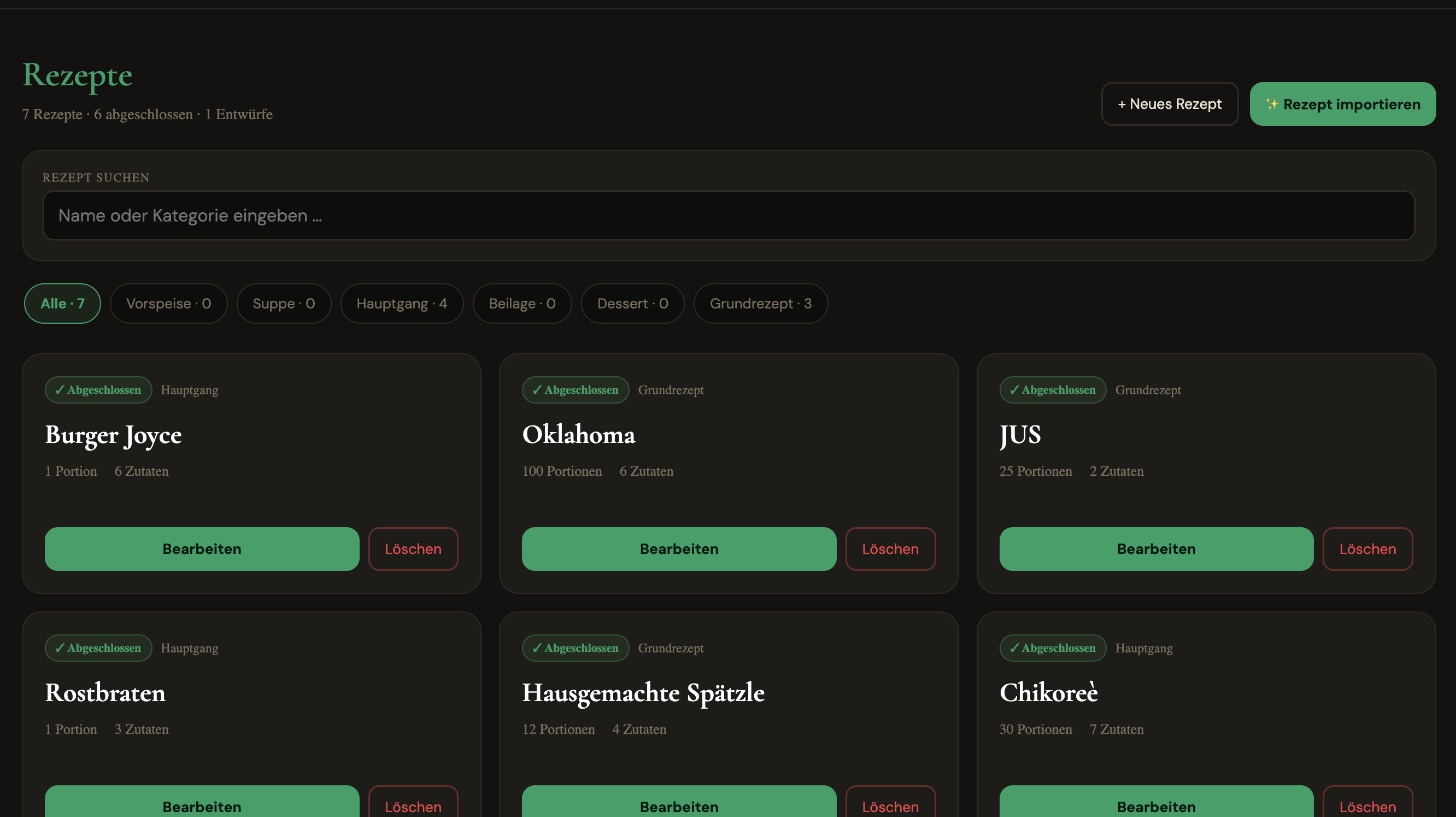
Food cost and margin on the net price, with 7 % VAT taken out.
Hold the button down. What falls into the pan is in no costing, and you have paid for it all the same.
Who does what
Everyone sees what they need, and nobody sees what is none of their business. Reporting and approving are two different rights, and they stay that way.
Whoever is at the shelf enters what is missing. Nothing more is needed. Approving is not possible from here, and that is on purpose.

Every report in one place, checked and approved. What is approved goes out. What is not stays put.
The number is right there. Food cost, margin, what the menu price has to be. Without touching a single formula.
What the app does
Price lists come in as PDFs, delivery notes through the camera, recipes through a link. No AI writes the method, it is taken over word for word. Anything that arrives incomplete is marked as uncertain and is not imported automatically. You check, instead of typing.
Dictate what is on the shelf. You can correct the recognised text before analysis. Review the preview before updating stock; the last import can be undone.
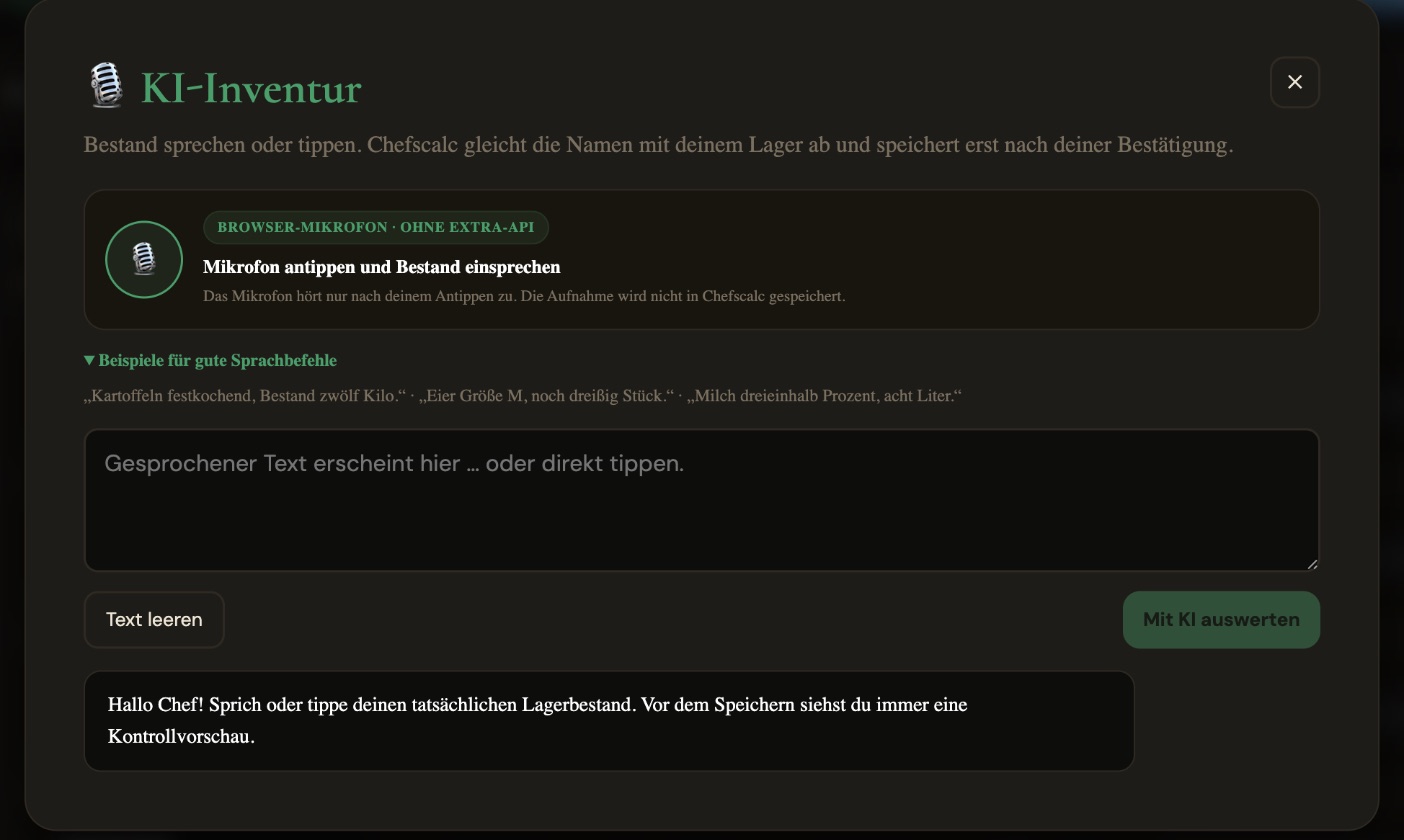
Say twelve hundred grams when the store keeps kilos. The unit is converted. If a unit does not fit, it is flagged rather than quietly guessed, and unknown items stand out clearly as new.
Whoever is in the store enters the need in Lagerpilot. In Chefscalc these requests land in one single list together with the automatic reorders, with pack count and status. You look it over, approve it, and the order goes to the supplier by email with one click.
This is how the order list comes together in Chefscalc.
Automatic reorders and hand written requests from Lagerpilot sit side by side. You decide once, not three times.
The approved order goes out as an email, with pack counts instead of loose kilograms. No retyping into a second form.
If your supplier would rather order over WhatsApp than by email, we set that up for your business.
Stock, minimum quantity and reordering in one place. The order list comes out of what is missing, not out of a free kilogram entry.

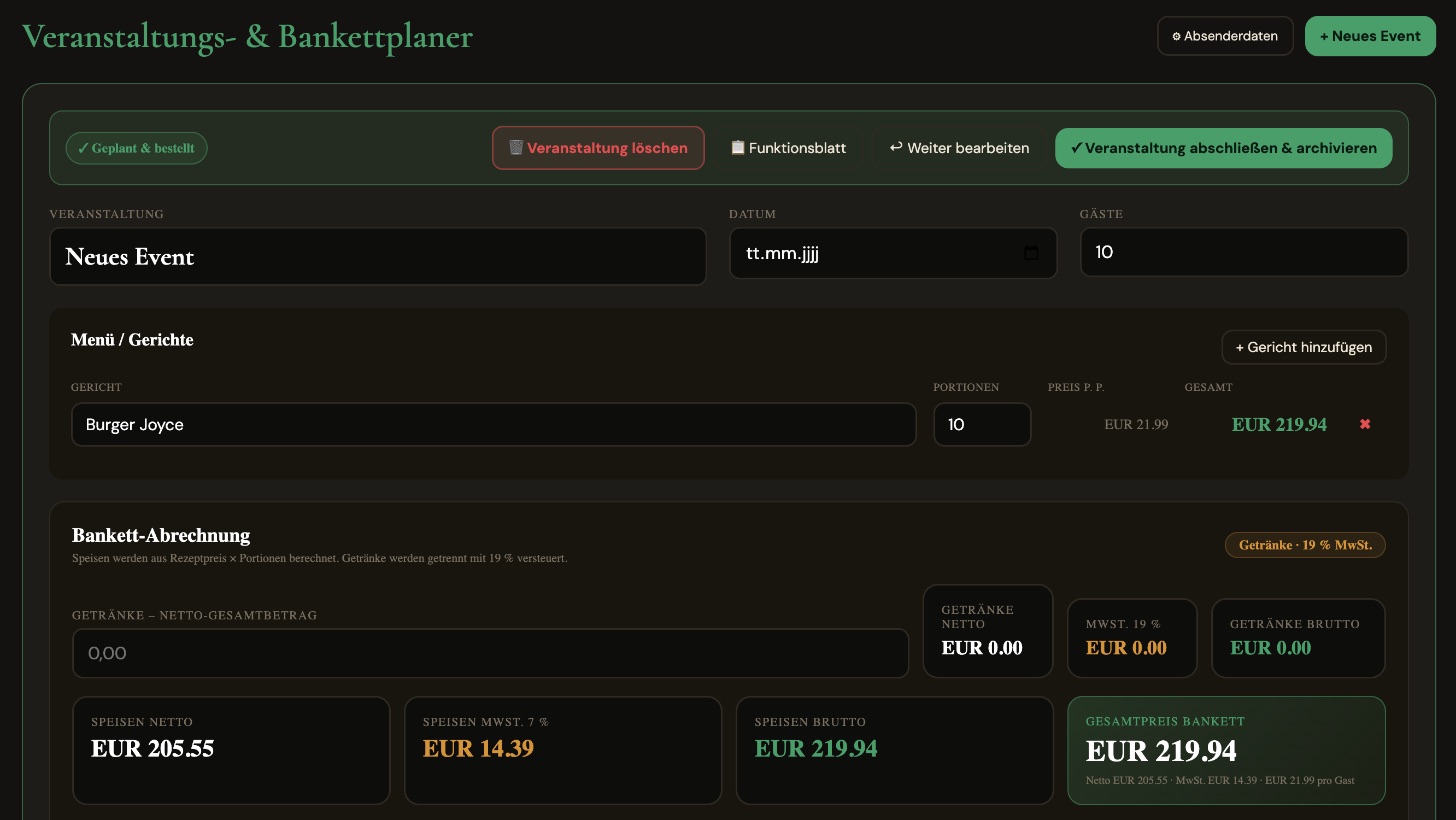
Food and drink per guest, scaled up to the party. The total price is there before you say yes.
Veal jus is a recipe of its own. Its recorded costs flow into linked dish calculations. Complete quantities and prices remain essential.
Information that exists only in your head must be entered once. Existing documents can help: PDF price lists, readable document photos or recipes from supported public pages. Recognition can make mistakes. Review and complete the result before importing it.
Start with one dish and enter its recipe, quantities and purchase prices. The time needed depends on your data and workflow. We walk through the first steps with you in a demonstration.
Chefscalc connects recipe calculation with maintained purchase prices and preparatory bookkeeping in the management cockpit. It does not provide full financial accounting, a cash register or staff scheduling.
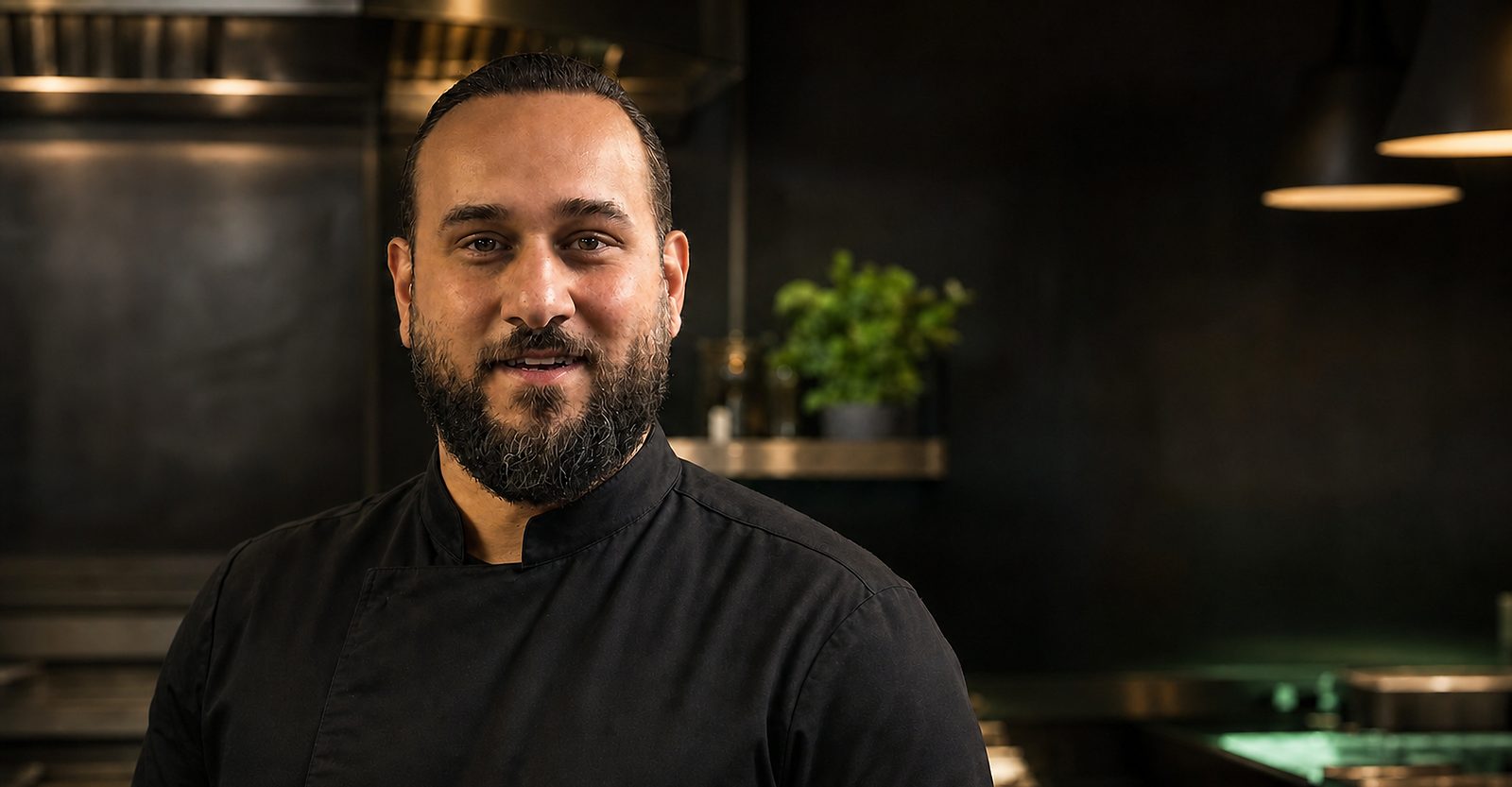
The best kitchen is the one that can afford its own quality. That is exactly what I calculate for.Semih Erdem, Head Chef
Around 30 minutes, by video or in your kitchen. Bring a dish you sell often, and your purchase prices. At the end your figure is there.